The Coastline Through Time
1600s
Easton Ness extends more than two miles into the North Sea, forming the easternmost point of England.
1925
The Boggis family acquires 371 acres overlooking the coast.
1940s
A Royal Navy listening station is built keeping watch for German boats at sea.
Throughout the 20th Century
The sea gradually reclaims the land, reshaping the landscape generation after generation.
Today
Approximately one third of the original estate remains. Architect-designed retreats, a seaside spa and moveable buildings reflect an ongoing commitment to living with this ever-changing coastline.
Landscape comes first
Long before there were retreats, spa treatments or even a family connection to the land, there was the landscape itself.
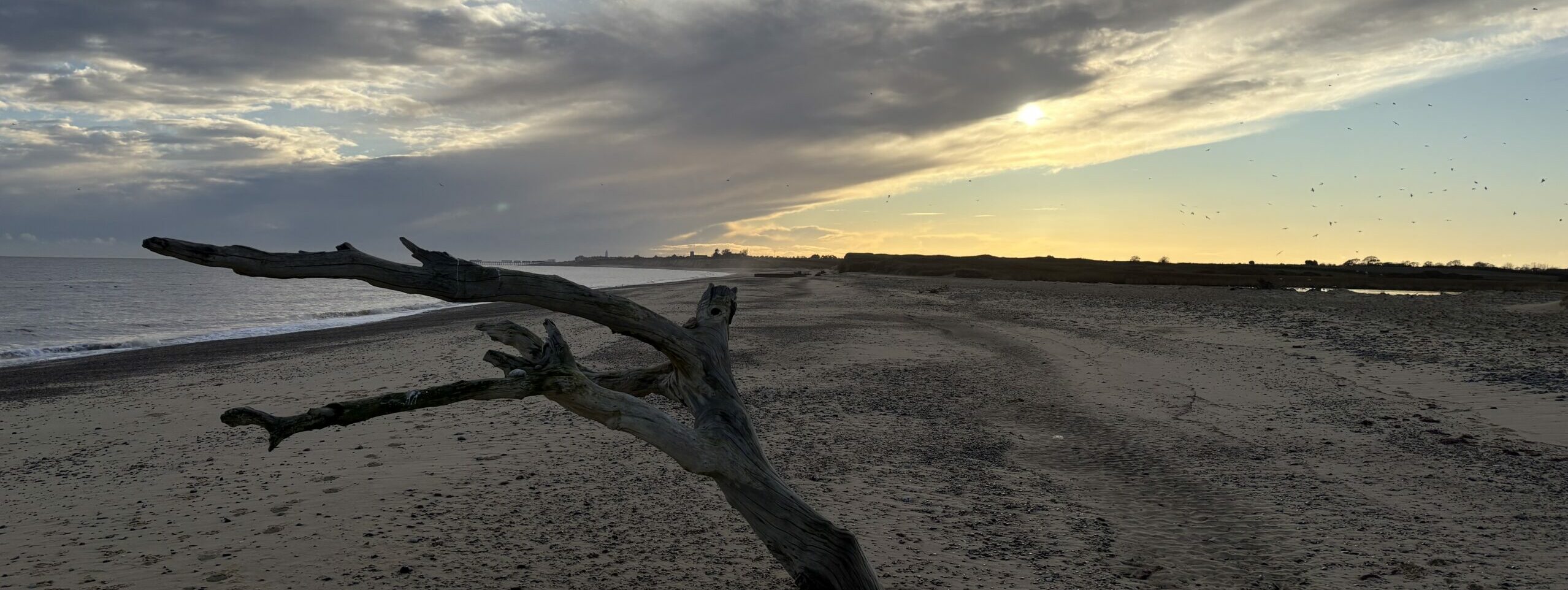
Easton Bavents has always been shaped by the sea. Once the most easterly point of England, its great promontory, Easton Ness, stretched more than two miles into the North Sea. Over centuries the coastline has changed dramatically, yet its sense of space, wildness and beauty remains.
In 1934, the Suffolk Chronicle and Mercury described the area;
“There is little to attract the attention but the fields, the marshes, the winding lanes, the pleasant countryside. Yet permeating this countryside, adding to its wholesome, healthy aspect, is the freshness of the nearby sea, so that everywhere there is the fragrance and the attraction that only the ocean and the countryside combined can provide, and which in themselves possess an atmosphere definitely invigorating, and most certainly appealing”
Nearly a century later, those words still feel remarkably true.
A family connection
Our family has been custodians of the land at Easton Bavents for over a century. The estate was originally purchased by Herbert Boggis in 1925. Herbert had plans drawn up by the famous architect Patrick Abercrombie to create a leisure village. However, the Second World intervened and the land was pressed into production. Throughout those years, the sea continued its slow work on the cliffs, reshaping both the landscape and our family’s relationship with it.
Living with change
Since Herbert Boggis first purchased the estate in 1925, the sea has reclaimed much of the land. What was once 371 acres has gradually been reduced to around a third of its original size, a powerful reminder that this coastline is constantly evolving.
This constant shrinking and changing has required a creative response. We now seek to share the natural beauty of the place with guests who can stay and enjoy the sea, skies and nature. We have created a small number of retreats designed to sit within this beautiful landscape and which can be moved with the changing coastline.
Architecture inspired by the place
Every building at Still Southwold begins with the landscape. Our aim has always been to create retreats that respond to their surroundings, celebrate the views and sit lightly within this ever-changing environment.
The Listening Station and Watch Room
Built on the site of an old Royal Navy Building. The Royal Navy commandeered the land here during the second world war and built a Y-listening station with large aerials. Wrens would be driven up from Southwold every day to listen out for German S-boats at sea.
This stunning place with it’s views to sea and prominent coastal position was the perfect place to create the Listening Station and Watch Room. These 2 architect-designed cabins make the very most of their stunning position with large full-height windows and are designed to fit into the landscape, covered in cedar shingles that have a beautiful silver iridescence in the coastal light.
The Sea Dragons
Local folklore tells of fishermen hauling strange “sea dragons” from their nets along this stretch of coast. Inspired by that Suffolk myth, the Sea Dragons were designed as contemporary interpretations of those legendary creatures.
Perched on the cliff top and gazing out to sea through dramatic glazed frontages, they are among the most distinctive buildings on the estate. Every piece of timber was cut to a unique angle and length, creating a complex architectural puzzle that tested our skilled carpenter but rewards visitors with a truly extraordinary place to stay.
The Easternmost Cabin
Located on the site of a terrace of 3 farmworkers cottages which had to be demolished because of coastal erosion in 2019. The Easternmost Cabin is named after ‘The Easternmost House’, a memoir written by the woman who once lived in one of the cottages that stood. The Cabin now enjoys the most secluded position but with incredible views towards Covehithe beach.
The Warren House
The Warren House occupies a special place in the history of the estate, it was built by Herbert Boggis as his farmhouse. It has been full refurbished now but still retains it’s position at the heart of the estate.
Nature and Wildlife
Here, wildlife is given space to thrive. Rather than manicured lawns and formal gardens, Easton Bavents remains a wild and natural landscape where skylarks sing overhead, marsh harriers hunt across the marshes and sand martins nest in the cliffs.
Guests often tell us that the wildlife becomes one of the most memorable parts of their stay. The changing seasons bring different sights and sounds, from the arrival of migrating birds to spectacular sunsets and vast Suffolk skies.
Wellness by the sea
People come here to relax, slow down and renew. For many guests, the greatest luxury is space. Space to breathe, to walk, to swim, to sit quietly and watch the sea. The sound of the waves, the birdsong, the fresh sea air all play their part.
Our Sea View Sauna and mobile Seaside Spa Room offer guests the opportunity to fully unwind, with aromatherapy massages, facials and reflexology enjoyed against the backdrop of sea, sky and the sound of the waves.
Looking ahead
We hope to continue to develop our business whilst still maintaining the peaceful environment for guests and the nature that lives here. This is a very beautiful place, naturally, we do not need to curate it. Our aim is not to overdevelop this landscape, but to preserve its peace, beauty and sense of wildness while sharing it thoughtfully with those who visit.
We are simply the latest custodians of this remarkable place. The sea will continue to shape it long after us, and our role is to care for it, adapt to it and share it thoughtfully while it can still be enjoyed.